Scope Markets Names John Murphy as Managing Director
John Murphy is now Managing Director at Scope Markets, as the company adds a trusted leader to guide its next phase.

John Murphy Named Managing Director at Scope Markets | Business Hub Middle East
John Murphy has been named Managing Director at Scope Markets. The move adds new leadership to the multi-asset financial services brand as it continues to grow across global markets. Senior appointments often signal where a company plans to focus its energy in the coming years, so the news is worth a closer look for traders, investors and industry watchers.
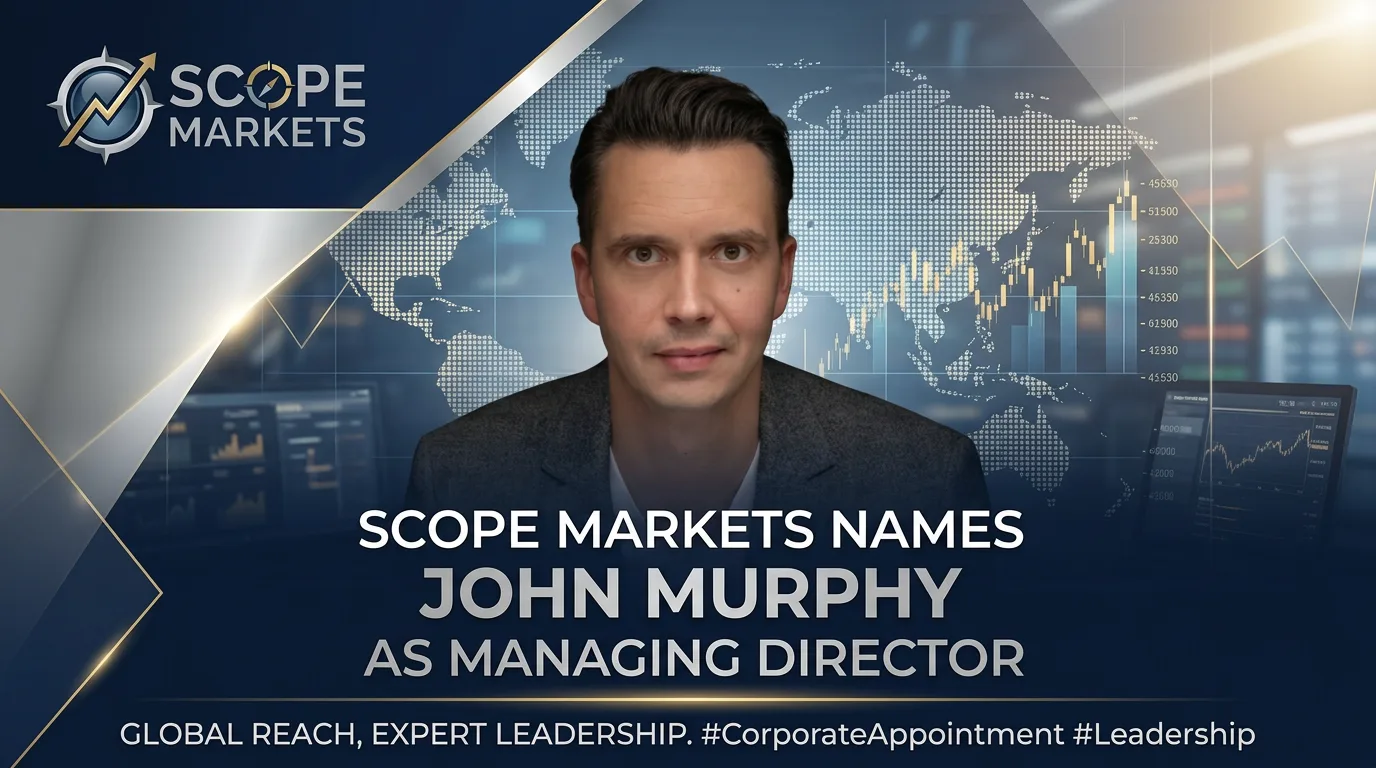
In his new role, Murphy will focus on Scope Markets' strategic plans, business growth, and wider international expansion. He will also work on commercial operations, support regional and global growth plans, and help the company serve retail, professional, and institutional clients. Each of these areas touches a different part of the business, from how products are packaged to how clients are supported after they open an account.
Why does a leadership change matter beyond the press release? In most financial firms, the managing director sets priorities that filter down to product teams, onboarding staff and client support. That is why readers often treat a senior appointment as a signal rather than a guarantee of any specific outcome.
Who Is Scope Markets?
Scope Markets launched in 2014. It is a financial services brand within Rostro Group, a brokerage group that works with customers in more than 200 countries. The group holds licenses in several jurisdictions and operates across a wide range of financial markets.
Within the group structure, John Murphy's remit focuses on Scope Markets' own strategic plans. Brands within a larger group may share technology, risk management and back-office resources, while client agreements are usually issued by a specific regulated entity. That is why the licence and the entity you deal with matter as much as the brand name.
Because the group operates in many countries, onboarding requirements and available products can differ by region. Always check the terms that apply to your country of residence before assuming that a product or platform is available to you.
Brand, Group and Regulated Entity Explained
Three terms are often mixed up when people read about brokers. The brand is the name clients see in marketing. The group is the wider company that may own several brands. The regulated entity is the legal company that actually signs your agreement and holds a licence, so it is the one to check first.
Readers researching John Murphy or any new executive can use the same approach: start with the official Scope Markets disclosures, then confirm the licensing details through the relevant regulator's public register. Avoid relying on social media summaries alone.
Market and Platform Access
The brand gives clients access to more than 40,000 markets through trading platforms such as MetaTrader 4, MetaTrader 5, CQG, IRESS, and Bloomberg, depending on the entity and the client offering. That range gives traders and investors access to many asset classes and markets in one place.
Multi-asset access means one account may cover forex, indices, commodities, shares or other instruments, depending on what is offered. Each asset class carries its own costs, trading hours and risks, so read the product specifications before placing orders.
| Platform | General purpose |
|---|---|
| MetaTrader 4 | Widely used retail platform for charting, automated strategies and forex and CFD trading |
| MetaTrader 5 | Successor platform with additional order types and wider instrument coverage |
| CQG | Professional-grade trading and market data software |
| IRESS | Market data and trading software used by brokers and institutions |
| Bloomberg | Financial data, analytics and trading connectivity |
Platform availability depends on the entity and the client offering, so it is worth confirming which tools apply to your own account. Traders new to the software can read the overview of MetaTrader 4 (Wikipedia) for background before comparing features.
Questions to Ask Before Choosing a Platform
- Which platforms are included for my account type and entity?
- Which markets can I trade on each platform, and are they the same across devices?
- What spreads, commissions and overnight charges appear in the fee schedule?
- Is there a demo account so I can test order handling before using real funds?
What the Appointment Signals for the Brokerage Sector
John Murphy's appointment comes as multi-asset brokers focus on leadership, technology, and client service to stay competitive. Demand for wider market access, quicker execution, and flexible trading systems keeps rising, so experienced management matters more than ever.
The appointment also points to the growing need for strong executive leadership in the brokerage sector. Clients want access to more instruments and more platform choice, so firms need to keep investing in leadership, technology, and service quality.
For retail traders, the practical effect of leadership changes is usually indirect. Strategy shifts can influence which markets a firm prioritises, how quickly new products are launched, and how support teams are organised. Watching how John Murphy and his team handle these changes over time gives a clearer picture than any single announcement.
Responsibilities of a Managing Director
As Managing Director, Murphy will help shape Scope Markets' direction as a diversified financial services brand. He will also work across teams to support business strategy, improve client engagement, and strengthen the company's regional reach.
The role typically sits at the top of the operating structure, connecting strategy with day-to-day delivery. In many brokerages, a managing director oversees areas such as:
- Strategic priorities and budget allocation across markets
- Commercial partnerships and regional growth
- Client experience, onboarding and service standards
- Coordination between technology, compliance and sales teams
When assessing John Murphy's role, it helps to look at the areas listed above and ask how each one is reflected in what the firm actually delivers to clients.
These are general responsibilities of the role rather than a detailed description of Scope Markets' internal structure.
What This Means for Clients
Clients rarely see a managing director's decisions directly. The effects tend to show up in onboarding speed, the clarity of account documents, and how quickly questions are answered. Keeping notes on these experiences can help you judge whether the firm is improving over time.
How to Evaluate a Broker After a Leadership Change
When a new Managing Director such as Murphy joins a broker, it is sensible to review the firm rather than react to headlines. A few practical checks can help you decide whether the broker still meets your needs.
- Confirm the regulator and licence for the specific entity you would open an account with, using the regulator's own public register.
- Check which platforms and markets are offered to your account type.
- Read the client agreement, fee schedule and withdrawal terms carefully.
- Test execution and support with a demo account where one is available.
- Keep a record of how the firm communicates changes to its clients.
Before you act on any news about John Murphy or another executive, compare the firm's published terms with what you were told when you first signed up. Differences between the two are a useful reason to ask questions.
A similar executive appointment in the sector is covered in our report on Chief Commercial Officer John Taylor Joins Valetax Leadership Team, which is useful for comparing how brokers describe their commercial priorities.
Risk Management and Client Protection
Strong governance is one of the areas a managing director influences most. Risk controls, segregation of client funds and complaint procedures are typically set at group or entity level, so it is useful to read the policies that apply to your specific account.
Ask how negative balance protection, margin close-out rules and order execution policies are described. Compare that wording with the risk warnings shown during account opening, and make sure you understand what happens in fast-moving markets.
Client protection arrangements also vary by jurisdiction. Some regulators require clear disclosure of compensation schemes, while others apply different rules. Check the official register and the documents provided by the entity you plan to use.
Looking Ahead: John Murphy and the Next Phase of Growth
With Murphy now in place as Managing Director, the company is set to keep building on its role within Rostro Group's wider brokerage network and its international growth plans. Scope Markets builds its offer around broad market access, platform choice, and multi-asset trading solutions.
Market conditions will also shape the firm's agenda. Volatility, changes in liquidity and new regulatory requirements can all push a brokerage to revisit its product mix and service model. Following regulatory announcements and the firm's own client notices gives a practical view of these changes.
Readers who want to follow how John Murphy's priorities take shape can watch for updates on product range, platform availability and regional expansion over the coming months. Changes in these areas tend to show the direction of a business more clearly than the appointment itself.
Trading leveraged products such as forex and CFDs carries a high risk of losing money quickly. Only trade with capital you can afford to lose, and make sure the product and your experience level suit you before opening an account.