LSEG FX Names Chris Soutar Global Lead for FX Swaps
LSEG FX has appointed Chris Soutar as director and global strategic lead for FX swaps. Here is his background, what the role covers, and why it matters for institutional FX markets.

LSEG FX has named Chris Soutar as director and global strategic lead for FX swaps. The appointment puts an executive with experience in institutional foreign exchange, electronic trading and financial market infrastructure in charge of shaping the company's global strategy for one of the most widely used instruments in the currency market. The news was shared by Soutar himself on LinkedIn.
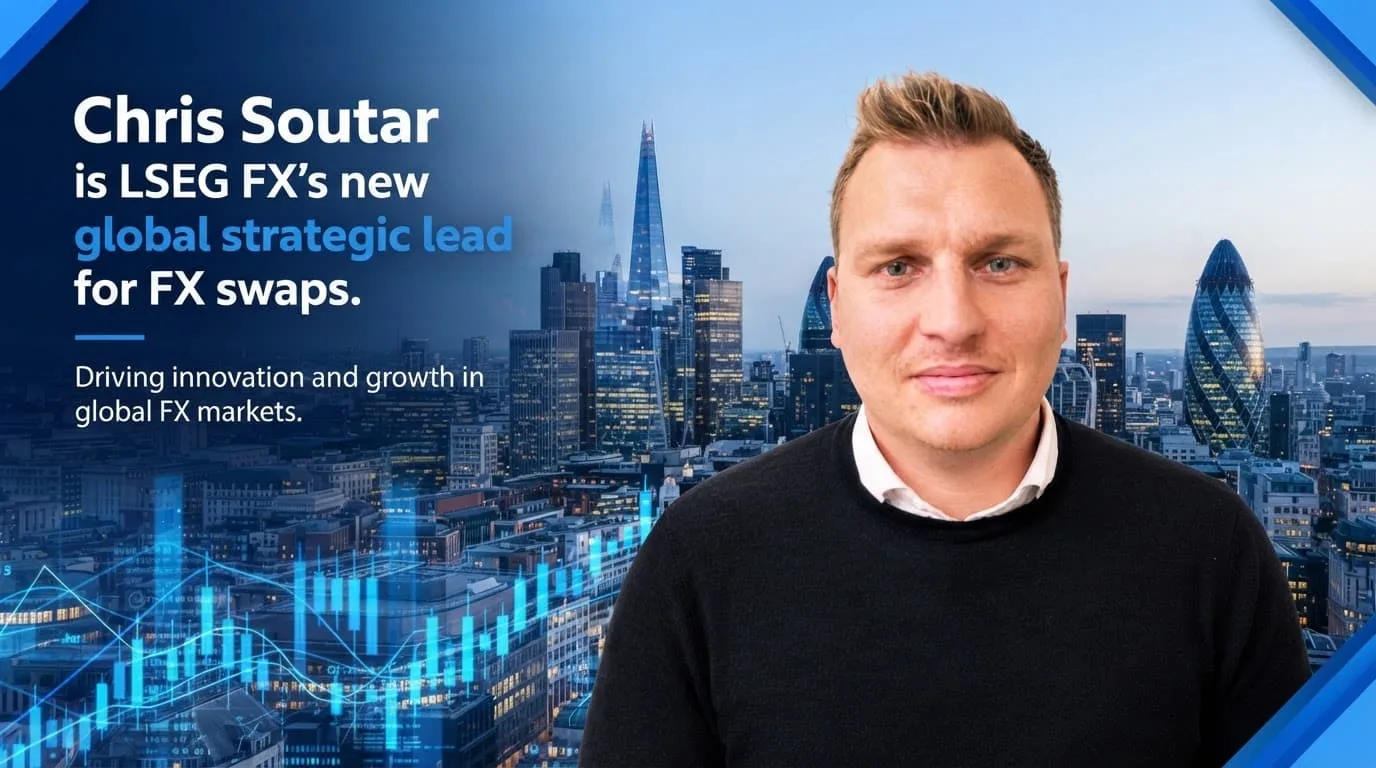
For readers following the institutional side of forex, the move is worth a closer look. It shows where LSEG FX is placing its focus: the funding, liquidity and currency risk tools that large market participants depend on every day. This article explains what the appointment covers, who Soutar is, what FX swaps do, and what the change may mean for traders.
What the appointment means for LSEG FX
The role of global strategic lead for FX swaps is a strategy position rather than a purely operational one. According to the announcement, Soutar will help shape the company's global strategy for FX swaps. That means setting direction for how the product is positioned, which clients it serves, and how it fits alongside the rest of the firm's foreign exchange offering.
Because the title is global, the remit is not limited to a single region. Institutional clients in different markets tend to have different funding needs, settlement preferences and technology expectations, so a global lead typically works across regional teams to align them. The announcement does not give a detailed breakdown of the responsibilities, so the points above describe the general nature of a strategic role rather than a confirmed task list.
Who is Chris Soutar?
Soutar comes to LSEG FX with a career that spans trading platforms, financial institutions and technology providers. The announcement describes him as having extensive experience in institutional foreign exchange, electronic trading and financial market infrastructure. His most recent role before LSEG FX was sales director for EMEA at Talos, which is described as an institutional digital asset technology provider.
Before Talos, he held positions at several firms across the trading and technology landscape. The table below summarises the organisations named in the announcement and how each one is described.
| Organisation | How it is described | Role in Soutar's career |
|---|---|---|
| LSEG FX | Foreign exchange business within the LSEG group | Director and global strategic lead for FX swaps (current role) |
| Talos | Institutional digital asset technology provider | Sales director, EMEA (most recent role before LSEG FX) |
| 360T | Deutsche Börse Group's institutional FX trading platform | Earlier position (title not specified in the announcement) |
| Eurex | Derivatives exchange | Earlier position (title not specified in the announcement) |
| Investec | Financial institution | Earlier position (title not specified in the announcement) |
| Currenex | Electronic FX trading platform | Earlier position (title not specified in the announcement) |
The pattern is clear even without the job titles: Soutar has moved between electronic FX trading venues, exchange-linked businesses, a bank and a technology provider. That mix is relevant to an FX swaps strategy, because the product sits where trading technology, institutional relationships and balance sheet needs meet.
Why FX swaps matter to institutional markets
An FX swap is an agreement that combines two legs: an exchange of one currency for another at the start, and a reversal of that exchange at an agreed later date. Institutions use it for purposes that are less about speculation and more about managing cash and risk across currencies. The announcement describes FX swaps as being used to manage funding, liquidity and currency risk.
In practice, institutional participants may use FX swaps to:
- Manage funding by obtaining cash in one currency while holding assets or liabilities in another.
- Manage liquidity by moving cash between currencies on a short-term basis without selling underlying positions.
- Manage currency risk by locking in exchange rates for a future date, reducing exposure to adverse moves.
- Roll positions forward when a hedge or funding arrangement needs to be extended.
Because these uses are operational as well as financial, the quality of pricing, execution speed and post-trade processing matters a great deal. That is one reason a strategy role for FX swaps often sits close to the technology and electronic trading agenda.
The wider context: electronic trading and liquidity
The announcement notes that institutional firms continue to invest in electronic trading technology, liquidity solutions and more efficient workflows. This is a broader industry trend. Many large participants are moving more of their FX activity onto electronic platforms, looking for better price discovery, tighter operational controls and fewer manual steps between trade and settlement.
For a global FX swaps lead, this trend creates both opportunity and pressure. Clients expect streamlined access and dependable liquidity, while the market expects transparency and reliable processing. Experience across trading platforms and infrastructure, which is the background the announcement highlights, is directly relevant to balancing those demands.
How this may affect traders
Most retail traders will not trade FX swaps directly. The instrument is primarily used by institutions, and its pricing and access are generally linked to professional relationships. Still, developments in institutional FX can influence the broader market over time, including liquidity conditions, pricing depth and the technology that connects brokers and banks to liquidity providers.
If you want to follow this kind of development without relying on rumour, the steps below are a practical starting point.
- Check primary sources. Look for official company announcements and LSEG's own communications rather than secondary summaries alone.
- Separate the news from the market impact. A senior appointment is a strategic signal, not an immediate change in prices or products. Expect any operational changes to take time.
- Watch for product and pricing updates. Changes in how FX swaps or related liquidity services are offered would be more relevant to traders than the appointment itself.
- Compare with your own execution data. If you trade FX, track spreads, slippage and fill quality over time so you can judge any real change in conditions for yourself.
- Review your broker's setup. Understand where your broker sources liquidity and how it handles execution, since these factors determine what you actually experience.
Key takeaways
- The fx has named Chris Soutar director and global strategic lead for FX swaps.
- The role is strategic and global, covering the direction of the firm's FX swaps business.
- Soutar's background includes sales leadership at Talos and earlier roles at 360T, Eurex, Investec and Currenex.
- FX swaps are used by institutions to manage funding, liquidity and currency risk.
- For most retail traders, the appointment is a signal to watch rather than an immediate change to trading conditions.
Risk reminder: Trading foreign exchange and CFDs carries a high level of risk and may not be suitable for everyone. Only trade with money you can afford to lose and make sure you understand the instruments you use.
About LSEG FX
The fx is the foreign exchange business of the London Stock Exchange Group (LSEG). The announcement covered the appointment of Chris Soutar as director and global strategic lead for FX swaps, and this article is based on the details provided in that announcement.
Related: oneZero hires LSEG exec Adam Morrow as Sales Director. Further reading: Foreign exchange market (Wikipedia).