FP Markets Names Geo Nicolaidis Head of AI Transformation
FP Markets has appointed Geo Nicolaidis as Head of AI Transformation, adding technology leadership to its Cyprus-based team. He will guide the broker toward an AI-native operating model.

FP Markets has appointed Geo Nicolaidis as Head of AI Transformation, adding technology leadership to the broker's Cyprus-based team. The role is focused on moving the company toward an AI-native operating model, meaning AI is built into how work gets done across the organisation rather than added on as a separate tool. For traders, the appointment signals how a established broker plans to handle its internal technology over the coming years, which matters for the platforms, support and services they rely on.
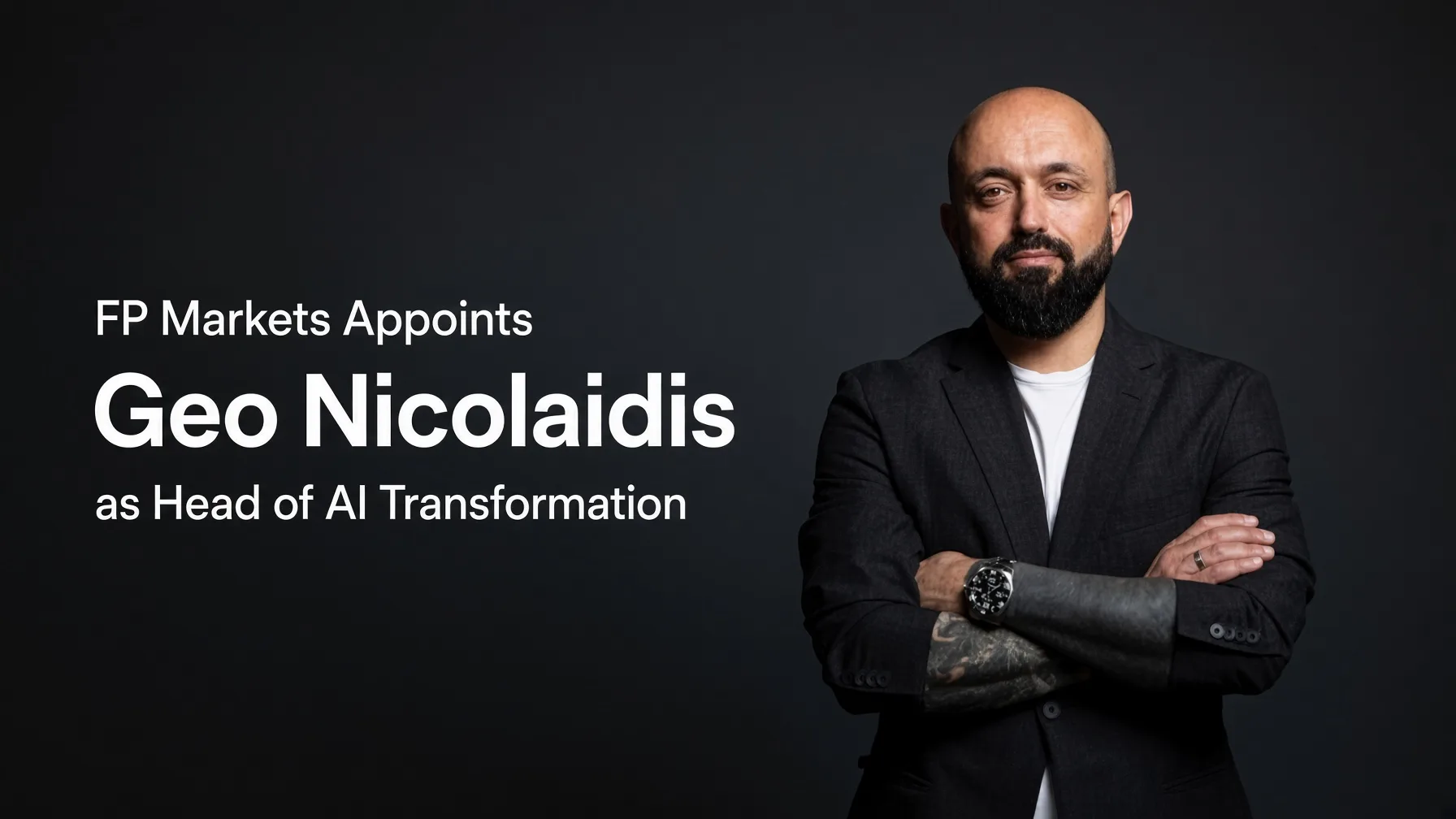
What the Appointment Means for FP Markets
An AI transformation role is about changing how a company operates, not only about buying software. In a brokerage, that can touch many areas at once: internal operations, client-facing processes, compliance workflows, reporting and the way product and engineering teams work together. Placing a dedicated leader in charge of this work gives the broker one point of accountability for the effort, rather than leaving it spread across separate departments.
According to the announcement, Nicolaidis will guide FP Markets toward an AI-native operating model. His responsibilities are set out in three main areas:
- Guardrails and evaluation methods for AI agents. As AI agents take on more tasks, the company needs clear rules on what they can do, how their output is checked and how errors are caught before they affect people.
- Transforming manual workflows. Repetitive, paper-heavy or hand-off-heavy processes are the usual starting point for automation, with the goal of making them faster and more consistent.
- Training cross-functional teams. Adoption depends on staff across departments knowing how to use AI tools effectively, not only on the technology itself.
Taken together, these points suggest the work is less about one product launch and more about changing day-to-day habits across the company. Results of this kind tend to appear gradually, and the announcement does not set out a timeline or specific targets, so it is best to watch for concrete changes over time rather than assume a particular outcome.
Geo Nicolaidis's Background
Nicolaidis joins FP Markets after five years at Deriv, where he most recently served as Executive Director of the Cyprus office. Earlier at Deriv, he worked as DevOps Manager and as Technical Product Owner for AI Automations. That sequence is relevant to the new role: DevOps work concerns how software is built, deployed and kept running, while a product owner for AI automations deals with turning automation ideas into tools that teams actually use. Combining the two kinds of experience with management responsibility in an office setting is a useful profile for a role that needs both technical understanding and the ability to bring colleagues along.
He also previously worked at FXGT, which is another firm in the online trading sector. The announcement does not give further detail on those roles, so this article does not go beyond what has been disclosed.
How AI Transformation Could Affect Traders
Most traders will never interact with an internal AI project directly. Still, the outcomes of this kind of work can show up in the services they use. The table below outlines areas where changes are commonly expected when a broker adopts AI-driven processes, along with what a trader might reasonably check. These are general observations, not commitments made by FP Markets.
| Area | What may change | What traders can check |
|---|---|---|
| Account and support processes | Routine requests may be handled more quickly and consistently | Response times and whether issues are resolved on first contact |
| Operations and reporting | Manual back-office tasks may be automated | Accuracy and timeliness of statements and transaction records |
| Platform and tools | Internal development cycles may become more efficient | Stability of the trading platform and how updates are communicated |
| Risk and oversight | Guardrails for automated systems become more important | Clear terms, published regulatory information and transparent policies |
The last row deserves particular attention. Any use of AI in a regulated financial business needs strong controls, and the announced focus on guardrails and evaluation suggests the company is aware of this. Traders should still rely on verifiable information such as the broker's published terms and its regulatory disclosures, rather than on announcements about internal technology alone.
Step-by-Step: How to Evaluate Changes at Any Broker
Whether or not a broker is working on AI, the same checks help when assessing how well a provider is run. The following steps are a practical starting point:
- Read the broker's terms and conditions. Confirm execution policies, fees, withdrawal conditions and how client complaints are handled.
- Check regulatory information. Look for the licences and entities that the broker actually states it operates under, and verify them on the relevant regulator's public register.
- Test support before you deposit. Ask a few specific questions and note how quickly and clearly they are answered.
- Trial the platform on a demo account. Pay attention to order handling, charting, stability during volatile moments and the clarity of account statements.
- Monitor changes over time. Track whether support, reporting and platform performance improve or decline after major organisational changes.
If you are comparing providers more broadly, our independent reviews cover factors such as account types, platforms and trading conditions. For example, you can read our XM Group review or our Doo Prime review to see how different brokers are assessed side by side.
Why AI Transformation Is Becoming a Common Priority
Across financial services, companies are looking at AI to handle volume, reduce manual work and improve consistency. Trading firms face particular pressure because client expectations for speed, clear communication and reliable tools are high, and markets do not pause. Setting up a dedicated AI leadership role is one way for a firm to organise that effort, but the real measure will be whether the changes reach clients in ways they can see and trust.
For readers, the most useful takeaway is that an appointment like this is a starting point. Clear governance, accurate information and consistent service matter far more to a trader than any single technology headline.
About FP Markets
Since its inception in 2005, FP Markets has aimed to transform trading by positioning itself as a trailblazer trading destination. Over the years, the company has pursued that goal through innovative trading technologies, customer support and a continuously enhanced trading experience.
The broker says these efforts have helped create the conditions for its traders and partners to seize opportunities and refine their investment strategies. It also states a commitment to keep developing its technology and products so clients can navigate global markets with clarity, confidence and a clear view of the future.
Trading CFDs and forex involves a high level of risk, and you can lose more than you invest. Make sure you understand the risks before trading and consider whether these products suit your circumstances.
Further reading: Foreign exchange market (Wikipedia).
We will keep this AI Transformation report updated as new information comes in.