Brian Rubenstein Joins Paxos as Product Manager for Brokerage
Brian Rubenstein joins Paxos as Product Manager, Brokerage, bringing fresh leadership to the team and a clear focus on product growth.

Brian Rubenstein Joins Paxos as Product Manager for Brokerage
Brian Rubenstein has joined Paxos as Product Manager for Brokerage. The move adds him to Paxos' brokerage product team, where he will help shape tools for financial institutions, platforms, and enterprises in the digital asset space.
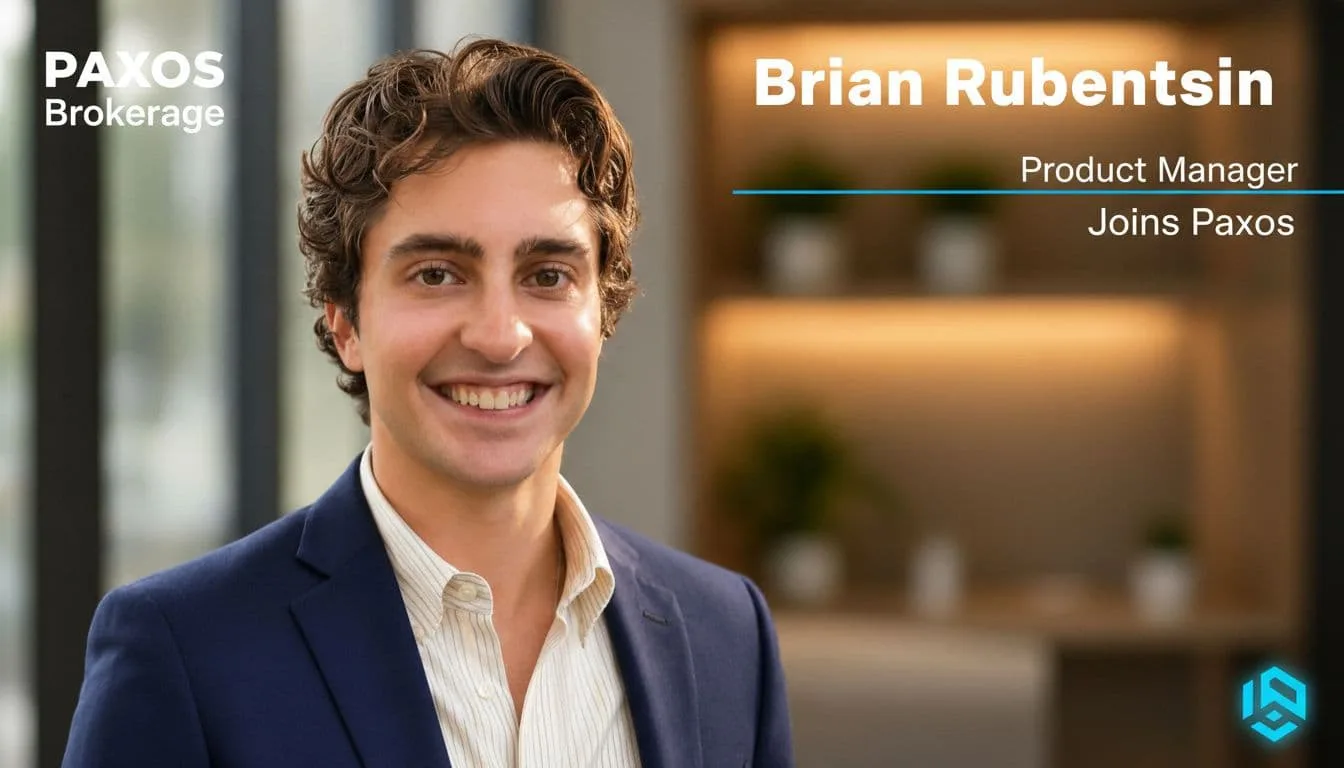
For readers who follow the digital asset and brokerage sector, the appointment is a useful signal about where infrastructure providers are investing their time and talent. Product roles in this area sit between engineering, regulation, and client needs, so the people in them often decide whether a platform feels practical or stays a complicated prototype.
Appointments like this one are often reported as simple announcements, but they can reveal more than the job title suggests. A product manager's remit shows which problems a company considers worth solving next.
Role of Brian Rubenstein at Paxos
In this role, Rubenstein will work on product strategy and delivery for brokerage-related offerings. He will also work with technology, compliance, operations, and business teams so the products fit the needs of institutional clients and market participants.
Brian Rubenstein's position sits at the centre of several conversations at once. Strategy decisions, technical limits, and regulatory expectations all have to be weighed before a feature reaches clients, and the product lead is usually the person who keeps those discussions moving.
A product manager in brokerage typically connects several groups at once. Each group looks at the same product from a different angle, and the product lead has to turn those views into one clear plan that can be built, reviewed, and launched.
In practice, this kind of work often covers the following areas:
- Defining the product roadmap and deciding which features come first
- Working with engineers on system design, testing, and release timing
- Reviewing requirements with compliance teams before anything goes live
- Making sure operations teams can support the product day to day
- Collecting feedback from institutional clients and market participants
Because brokerage products touch money, records, and client obligations, these steps are rarely simple. Good product management is often about preventing problems early rather than fixing them after launch.
When reading any hiring announcement, it helps to ask what the new role is expected to deliver. A title alone rarely explains whether the work focuses on new features, client onboarding, risk controls, or operational reliability.
About Paxos and Its Blockchain Infrastructure
Paxos is a regulated blockchain infrastructure and tokenization platform. The company builds enterprise-grade services that help firms move, settle, and tokenize assets through blockchain-based systems.
It focuses on financial institutions that need regulated digital asset tools and market infrastructure that works at scale. For these clients, reliability, auditability, and clear compliance processes matter as much as the underlying technology.
Core Services Described in Public Sources
The World Economic Forum says Paxos works with enterprises to tokenize, custody, and trade assets. The group also links the company with regulated digital assets such as PayPal USD, Pax Dollar, and Pax Gold.
Paxos also aims to make core financial processes work with more speed and transparency. Its infrastructure supports digital assets, tokenized assets, and blockchain settlement within a regulated framework.
Readers who want to verify these descriptions can compare them with the company's own materials and with independent coverage. Public summaries are useful starting points, but they are not a substitute for reviewing how a specific service works.
Why Digital Asset Infrastructure Matters for Brokers
Demand for compliant digital asset infrastructure continues to rise across global markets. Traditional finance is under pressure to move faster and cut friction, so firms like Paxos are helping connect legacy systems with blockchain-based services.
For brokers, the appeal is straightforward. Faster settlement, better record keeping, and new ways to offer tokenized products can reduce operational steps. At the same time, each new system adds questions about security, custody, and regulatory oversight that must be answered before clients rely on it.
This is why product roles matter so much. A technically sound system can still fail clients if its onboarding steps, disclosures, or support processes are unclear. Product managers are often the link that makes these details work together.
What the Appointment of Brian Rubenstein Signals for the Market
Rubenstein's appointment points to the growing need for strong product leadership in digital brokerage and blockchain-enabled finance. As this market develops, product managers play an important role in turning complex infrastructure into practical, scalable tools.
The news about Brian Rubenstein is one of several signals that financial firms are staffing up in product roles, not only in engineering. That suggests a shift from proving the technology works toward building products that institutions can use every day.
Gold, Tokenization, and Regulated Digital Assets
Tokenized products are often compared with traditional assets. Pax Gold is one example that readers may connect with gold markets. Anyone who wants background on the traditional asset class can read Gold as an investment (Wikipedia) before comparing it with tokenized alternatives.
Tokenization changes how ownership is recorded and transferred, but it does not remove the need to understand the underlying asset, its price drivers, and the rules that apply to it.
A token that tracks an asset still carries the risks of that asset, plus the risks of the platform, custody arrangement, and legal structure behind it. Traders should consider each layer separately.
Practical Checklist for Traders Following Brokerage Technology
Developments like the Brian Rubenstein appointment matter to traders mainly because they shape the tools that brokers offer. When evaluating any broker that adds digital asset or tokenized products, a structured review helps separate marketing claims from verifiable details.
- Confirm the broker's licence and the regulator that supervises it, using the regulator's own register.
- Read the terms covering custody, settlement times, fees, and how client assets are held.
- Check how the product is priced, including spreads, commissions, and any conversion costs.
- Look for clear risk disclosures and a description of what happens during market stress or outages.
- Compare several sources before committing funds, and avoid relying on a single announcement.
For another recent leadership appointment in the trading sector, see Brian Liedberg Joins MEX Exchange as CRO and Head of Sales.
Key Takeaways on the Appointment of Brian Rubenstein
The rubenstein's move into the Product Manager for Brokerage role at Paxos highlights how much work sits behind digital brokerage products. Strategy, engineering, compliance, and operations all need to align before a product reaches clients.
Paxos continues to strengthen its product team as it builds support for the next wave of financial market infrastructure. Readers who track brokerage and blockchain developments can watch how these product roles translate into new services over the coming months.
Trading involves risk, and digital asset products can be volatile and complex. This article is general news and not investment advice, so review the official information from any firm before making decisions.