Assem Mansour Joins HFM as Head of Market Research, MENA
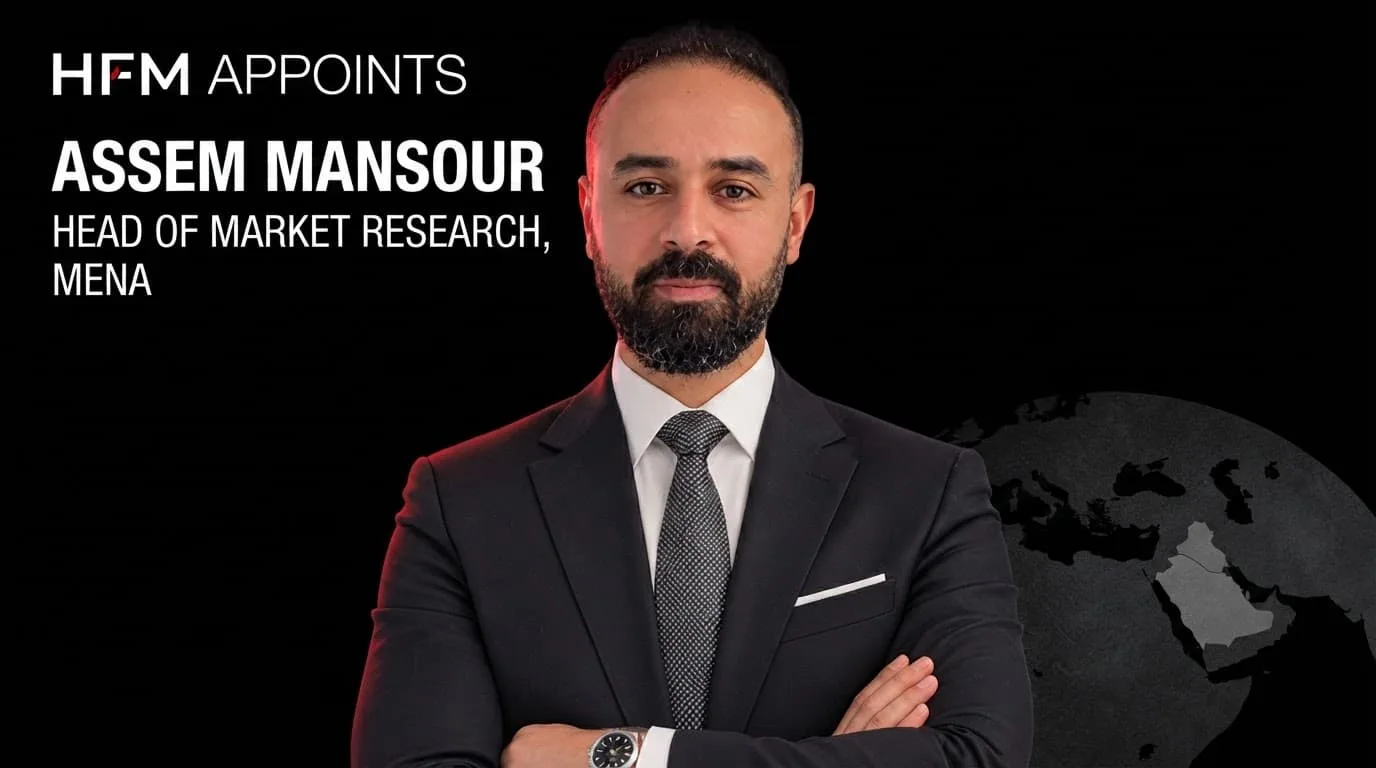
Assem Mansour has joined HFM as Head of Market Research for the Middle East and North Africa, bringing market analysis expertise to the firm's regional research team. The appointment signals a continued focus on coverage tailored to MENA traders and investors.

HFM has appointed Assem Mansour as Head of Market Research for the Middle East and North Africa (MENA) region. In the role, Mansour will lead HFM's regional research efforts and provide market analysis for traders and investors across MENA. The appointment reflects the firm's focus on delivering timely, relevant perspectives as MENA markets become more important within global finance.
Appointments of this kind are worth a closer look because they show where a broker is putting its resources. This article explains what the role involves, why regional research matters for traders, and how to judge any broker's market commentary before relying on it. It is written for information only and is not investment advice.
What Assem Mansour's Appointment Means
The appointment places Assem Mansour at the centre of HFM's research work for the MENA region. As Head of Market Research, he is responsible for shaping how the firm analyses regional markets and how that analysis reaches clients. For traders, this is the part of a broker that often matters most after execution quality: the ability to understand what is moving markets and why.
The announcement focuses on the role rather than on a detailed career history, so this article does not add details about his previous positions. What is clear is the remit: leading MENA research and providing market analysis for traders and investors in the region.
What a Regional Market Research Role Covers
Market research at a broker can take several forms. A regional research head typically sets priorities for what gets covered, how often, and in what format. Based on the stated remit, the work is aimed at:
- Regional market analysis: explaining how developments in MENA markets relate to the wider global picture.
- Timely commentary: giving traders perspectives while they are still relevant to live decisions.
- Relevant coverage: focusing on the instruments and themes that matter to traders and investors in the region.
- Practical insight: turning analysis into information that supports decisions, rather than general headlines.
Each of these goals is easy to state and harder to deliver consistently. Coverage has to be produced on a schedule, kept accurate, and adjusted when conditions change quickly.
Why MENA Market Coverage Matters to Traders
Traders in the Middle East and North Africa have access to global markets through many of the same platforms used elsewhere, but local context can change how a given event is interpreted.
A central bank decision, an energy price move or a shift in regional sentiment may carry different implications for a trader in Dubai, Cairo or Casablanca than it does for someone trading from London. Regional research aims to fill that gap by connecting global data with the conditions that shape regional markets.
Most retail trading in these markets still depends on the Foreign exchange market (Wikipedia), which trades across time zones through the week. Knowing how that market is structured helps traders see why regional news can move prices in ways that headlines alone do not explain.
The announcement itself notes that MENA markets continue to grow in importance within global finance, and the new Head of Market Research, Assem Mansour, will work on this area directly. For individual traders, that growth means more reasons to follow regional analysis alongside global news rather than treating the two as separate.
How Assem Mansour's Remit Could Shape Client Research
Once a regional research function is established, its value to clients depends on consistency. The priorities set by the new head of research will influence which markets get attention, how often reports are published, and how clearly the reasoning behind each view is explained.
Traders can judge this over time. Look at whether coverage keeps pace with events, whether conclusions are explained rather than simply stated, and whether the research changes when the data changes. Those patterns say more than any single report.
Types of Research Traders Should Look For
Not all research is equally useful. The table below compares common research formats, so you can judge what fits your trading style before relying on any single source.
| Research format | Best suited for | What to check |
|---|---|---|
| Daily market commentary | Short-term and intraday traders | Whether it covers the instruments you trade and is published before your session |
| Macro and event analysis | Swing traders and investors | Whether it explains the likely channels of impact, not just the headline |
| Regional market focus | Traders active in MENA-linked markets | Whether local conditions are discussed with specifics rather than generalities |
| Educational content | Newer traders | Whether concepts are explained clearly and tied to real market examples |
Format matters as much as content. A long report may suit a weekend review, while a short morning note is more useful before the session opens.
How to Use Broker Research in Your Trading
Research is most valuable when it is part of a process rather than a signal to buy or sell. A simple approach looks like this:
- Identify your focus markets. List the instruments and sessions you actually trade.
- Read research before your session. Use it to understand the context and key events on the calendar.
- Test the view against your own analysis. Ask whether the data supports the conclusion and what would prove it wrong.
- Define risk before entering. Set position size and stop levels based on your plan, not on the research alone.
- Review outcomes. Keep a journal of which research sources helped your decisions and which did not.
Treating research as one input among several helps you avoid over-reliance on any single author or firm, including the research team at your own broker, such as the team led by Assem Mansour.
Common Mistakes When Following Broker Research
One frequent error is treating a forecast as a promise. Market views are conditional, and they can be wrong even when the reasoning is sound. Read the assumptions behind a view, not only its conclusion.
Another mistake is reading too much research at once. Overloading on commentary can lead to conflicting signals and slower decisions. Choose a small number of trusted sources and check them on a fixed schedule.
Finally, avoid changing your plan after every update. If new research challenges your thesis, take time to review the evidence before adjusting positions or risk limits.
Assem Mansour on the Role
In the announcement, Mansour said:
"The MENA region continues to grow in importance within global markets, and I look forward to working alongside the talented team at HFM to strengthen our research offering and bring timely, relevant market perspectives to traders and investors across the region."
His comments point to two priorities: strengthening the research offering and keeping it timely and relevant to regional clients. Those are the measures traders can use to judge the work over time, by checking whether coverage stays current and specific to the markets they follow.
Assem Mansour's remarks also set a useful benchmark. If you follow the team's output, compare it against what you see in practice, and note whether the commentary changes when market conditions do.
Background: HFM
HFM is a multi-asset trading provider. The company states that it has operated since 2010 and describes its offering as combining technology, education and trading conditions across multiple asset classes. HFM also says it serves clients from around the world and refers to awards, although the announcement does not list them. As with any broker, traders should review the current terms, regulatory status and account conditions directly before opening an account.
The appointment of Assem Mansour sits within this wider company profile, which is why the research role should be judged alongside the firm's trading conditions and service.
For comparison, traders reviewing research and trading conditions across brokers can read our independent reviews, such as the XM Group review and the FBS Inc review, which cover different account types and market access.
Appointments like this one are often read alongside other senior moves in the industry. For a different example of a leadership change at a trading firm, see Sahil Patel Joins EmpireFX as Chief Operating Officer.
What Traders Should Check Next
Before you rely on any research team, including the one at your own broker, work through these checks:
- Confirm the regulatory status and licence details on the regulator's own website.
- Read the account terms, spreads and fees that apply to the instruments you trade.
- Check that research is dated and published before your trading sessions.
- Compare commentary with independent sources and with your own analysis.
Coverage from Assem Mansour and the MENA team will only be useful if it holds up under these checks.
Risk Reminder
Market research, including commentary from a broker's own team, does not guarantee results. Leveraged trading can lead to losses that exceed your initial deposit in some cases, so only trade with capital you can afford to lose and make sure you understand the risks before you start.